Do We Love Jesus Enough To…..

voting-opposedDo we love Jesus enough to…. stand up for what we believe is right?

Do we love Jesus enough to….stand up for the marginalized in our very midst?

Do we love Jesus enough to….stand up for those in our midst who are in danger?

Do we love Jesus enough to….be honest when Jesus asks for our opinion?

Do we love the church enough to….stand up and protect it as Jesus has designated?

Do we love the church enough to….participate in its governance as Jesus has designated?

Do we love the apostles enough to….be honest when they ask for our opinion?

Finally, do we love Jesus enough to….to follow Him?

General Conference

On Saturday October 1st, a very special event will occur.  At the general conference of the Church of Jesus Christ of Latter-day Saints, the Law of Common Consent will be put into practice.  This is a sacred opportunity for all members of the church to express their “approval” or “disapproval.”  (D&C 124:144)

This divine system of governance in the kingdom of God was declared by the Savior Himself.  In Doctrine & Covenants 28:13, “For ALL things MUST be done in order, and by common consent in the church.”

Can a person hold an office in the church without the consent of the people?

Nope.  “No man can preside in this Church in any capacity without the consent of the people. The Lord has placed upon us the responsibility of sustaining by vote those who are called to various positions of responsibility. No man, should the people decide to the contrary, could preside over any body of Latter-day Saints in this Church.” –LDS Website

Who should nominate the officers of the church?

“It is not the right of the people to nominate, to choose, for that is the right of the priesthood.” –LDS Website

Does Common Consent apply to more than just church officers?

Oh yes, so much more!!!   “This same principle operates for policies, major decisions, acceptance of new scripture, and other things that affect the lives of the Saints. (see D&C 26:2) LDS Website

And, there is the sticking point.  Today, no policies, no major decisions, not anything that affects the lives of the Saints are being presented nor accepted by common consent.  If we are opposed to any of the above, the only real option seems to be voting opposed to the general leadership.  Someday that will change.  Eventually, the membership will no longer tolerate disobedience of this plain and precious law of God.

If You Support Everything The Church Is Doing…

Please, carefully consider your vote.  A vote to sustain the prophets and apostles is a great way to vote.  I commend & support your action.

If You Generally Support Everything, But Have Concerns…

Please, carefully consider your vote.  Whether you abstain or vote in approval, good for you.  Your opinion is important to the governance of Christ’s church.

If You Have Major Issues with Policies “That affect the Lives of the Saints

Please, carefully consider your vote.  The unanimous votes that are recorded at General, Stake and Ward Conferences are sending a clear signal to SLC and to the general membership that “all is well in Zion.”  However, many feel that all is NOT well in Zion.  That includes me.

Jesus’ system of church governance addresses practical concerns.  Common Consent helps prevent errors, correct errors, provide accountability and put a check on “Unrighteous Dominion.” (D&C 121:39)

Besides practicality there is another side of Common Consent.  To me, this law is one of the most beautiful in our entire canon.  Most commandments are like:  “Do this…Do that…Don’t do this…Don’t do that!”  Oh…but this law is more like:  “Sam, you are of great worth.  I value your opinion.  I value your critical thinking.  I have commanded the apostles, whom I have put in place, to ask for your input.  When they do, please be honest.  I’m trusting and relying on you, Sam.”  When I consider how the Lord Jesus has set up the governance of His church, a tear of joy graces my eye.  He loves, respects and values each of us and our opinions.

If You are Opposed, I Encourage you to Vote Your Opinion

First, I know that many are constrained by fear.  Fear of family, friends, or business repercussions.  Those are legitimate considerations.  It’s an unfortunate element of today’s LDS culture that prevents full participation in the Law of Common Consent.  Your silence is understandable and certainly an honorable path.

Now, to the group in which I find myself:  Those who oppose and are willing to fully engage in the divine process of church voting.

Please, carefully consider casting a vote.  This is general conference (GC) and is the easiest of all the conferences.  The voting session occurs Saturday afternoon.  Here’s how you can effectively vote.

  • Attend GC in Salt Lake City.
  • Watch GC in your stake center or local chapel, if conference is broadcast there.
  • Watch or listen to GC in your home.
  • MOST IMPORTANT:  After the Saturday voting session, send an email to your bishop and Stake President.

Questions and Concerns

Do I have to spend time composing an e-mail?  Not necessarily.  Click here for examples.  Take ideas from it.  Modify it.  Or flat out copy it.

How will anyone know that there are actually members opposing?  Great question.   A Common Consent Register has now been created.  In this document you can record your name as having voted OPPOSED or planning to vote OPPOSED.  For many it is a scary experience…putting their name in full view of the public.  Certainly, it is a worthwhile cause to stand up for what we believe and to speak out for those who can’t speak for themselves.

What are the risks?  There shouldn’t be any risks to obeying a commandment from Jesus Christ in the church of Jesus Christ.  But, the risk is real.  I’ll address that in a blog post coming in the next few days.

Will I be asked to meet with a church leader?  It’s likely that the stake president or bishop will want to discuss with you.  That should be a very good thing.  It gives you the opportunity to explain your position.  In an ideal church, your opinion would be forwarded up the chain.  If a significant number of members engage in common consent, vote tallies will be taken seriously.  In the ‘risks’ posting, I’ll give some ideas for the interview with church leaders.

My Hope & Prayer

I love my church.  The church of my child and adulthood.  The church of my forefathers, my parents, my children, my grandchildren.  It’s a good church.  It’s the church of Jesus Christ.

I pray that good men and women all over the world will raise their hands and express their sincere and true opinions.  Jesus is counting on us.

I wish you Godspeed in this vital voting opportunity.

Divorce or Disobey?

Hint: Adam and the Mormon Temple say……..DISOBEY.

image

A Tender Text

Today, my youngest daughter sent me this message:

Dear dad,

Thank you so much for putting mom and our family before yourself. Today I met a Mormon couple that is getting divorced because the man has left the church. I talked with them for a while and it was apparent that he just wasn’t willing to make sacrifices for his wife’s happiness. I am so glad to have a father who is able to see the importance of family above everything else.

Love, Emily

BTW, I have not left the LDS church.

Divorce

Over the past couple of years, I have come in contact with many members who have left the church. Their prior faith obliterated by history, doctrine & policies that they had only recently discovered. This includes good friends and family.

Sometimes, married couples depart from the church together. Sometimes, it’s only one spouse whose faith transitions. Unfortunately, I have heard and read many stories of couples divorcing when only one leaves the church. Often, the believing partner is encouraged by bishops and stake presidents, family and friends, to divorce the non-believing spouse. The family is broken. Children confused, scared and heartbroken.

All this over belief & church.  Is marriage less important than belief?  Is family less treasured than church?

Disobedience

For the first time in almost 2 years, I recently attended the temple. I explain here exactly why I decided to go back.  This time, I went with new eyes.  It was fascinating, uplifting, and spiritual.  Lot’s of new understandings.  I have already written about one monumental take-away here.

The temple movie presents a beautiful portrayal of the creation story.  Adam & Eve are placed in the Garden of Eden.  Satan tempts Adam do disobey God.  Our first father will have nothing to do with disobedience.

Eve is Lucifer’s next target for temptation.  She carefully considers the Adversary’s argument. Her rational decision is to disobey God.  Result: Eve was to be cast out of the protected, perfect and paradisiacal Garden of Eden.

Now, it’s her turn to offer the forbidden fruit to Adam. He considers. Refuses.  “I will not disobey Father,” he insists.  Eve persists.  Finally, Adam looks into heaven and weighs the options.  His decision: it’s more important to disobey God than to have their precious union broken-up.

What a tremendous temple statement!  What an amazing example of righteous disobedience!  This, from the very first story in the bible.  The foundational epic of Christianity and Mormondom highlights two “sinful” acts.  Eve disobeyed God in order to bring about the human race.  Adam disobeyed God in order to keep his marriage in good grace.

So, bishops & stake presidents, friends & family, reflect on the temple teachings before you encourage a believer to divorce the non-believer.

1 Corinthians 7:14 “For the unbelieving husband is sanctified by the wife, and the unbelieving wife is sanctified by the husband.”

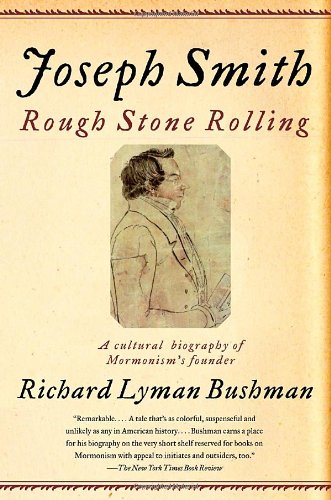
“The Dominant Church Narrative Is Not True”

image

This, according to Dr. Richard Bushman. I have many friends who have left the church because they, also, have found out what Bushman knows. More friends are on the fence. “The dominant church narrative is NOT TRUE.”

Fireside

Dr. Richard Bushman, is a serving LDS patriarch, former stake president, historian, expert on Joseph Smith, and author of Rough Stone Rolling.  At a recent fireside, he was the featured speaker.  During the Q&A, the following exchange took place:

Questioner:  “In your view, do you see room in Mormonism for several narratives of a religious experience or do you think that in order for the Church to remain strong they would have to hold to that dominant [orthodox] narrative?”

Richard Bushman:  “I think that for the Church to remain strong it has to reconstruct its narrative.  The dominant narrative is not true;  it can’t be sustained.  The Church has to absorb all this new information or it will be on very shaky grounds and that’s what it is trying to do, and it will be a strain for a lot of people, older people especially.  But I think it has to change.”

Not True

Thank you, Richard Bushman, for validating what so many of us already know! “The dominant narrative is not true!”

We have been taught, and are still teaching, things that are untrue. Untrue = false. Teaching a known falsehood = lying.  Either way, unwittingly teaching falsehoods or lying, neither should an integral part of the “only true and living church.”

Somehow, our LDS culture has developed to where it’s improper, stigmatized, or outright forbidden to discuss “new information.” As a result, half truths and falsehoods are commonly taught. Openly discussing our history, doctrine and policies is not permitted, at least not in my locale.

It Can’t Be Sustained

So, why are we trying so hard to sustain & control our current curriculum and discussion?

I think many members are totally fine with the falsehoods in the church. For them, the false narrative feels safe. I’m OK with that.

However, there is a large and growing group of members who will not tolerate a narrative saturated with falsity.  I have joined this group.  Feeling betrayed, many have left.  Feeling betrayed, I stay.  Still committed to the church. Still committed to truth.  No longer committed to false narratives.  Life is too short.  Salvation, too precious to embrace what I & Bushman know to be false.

MoroniAll Truth Can Be Circumscribed Into One Great Whole

I now pay very close attention to the covenants and doctrines of the temple. At the end of the endowment ceremony, we are taught that “all truth can be circumscribed into one great whole.” Profound and thought provoking.  The church is violating it’s own temple instruction.  It has circumscribed falsehoods into the “great whole” and consigned much truth into hidden obscurity.

My temple covenants are more sacred to me than circumscribing a narrative that is “not true.”

Driving Members Away

I have been told that we should never discuss our true and complete history and doctrine at church.  It can cause people to lose their testimonies.

What a weird thing to say!  So, it’s better to hide the truth so that a person will continue to believe the “truth” that’s really not true?  I know that there are adults in the church who want to be treated this way.  Not this adult.  In fact, most adults would say this is not adult behavior.  “When I became a man, I put away childish things.”

I now see the other side.  Not discussing our complete history and doctrine at church is causing members to lose their testimony.  It has driven my friends right out of the LDS church. The church whose “dominant narrative is not true.”

Teaching and embracing falsehood is not good…at least, not in my neighborhood.  My church is good, it’s time to get better.

Mr. Cubit’s Shocking Gay Interview

Anonimity

Mr. Cubit

I met Mr. Cubit about 2 years ago.  It was around the time that my church questions started to coalesce.  He has witnessed my entire journey and has been a great support.  In fact, he has been very influential in the path I’ve chosen.  For the time being, he’s asked me to maintain his anonymity.  After reading this, I think you’ll understand his quest to remain obscure.

The Gay Interview

Sam:  Could you describe your current status within the LDS church?

Mr. Cubit:  I’m an active, believing, heterosexual member.  My life has revolved around the church my entire life.  It’s a wonderful organization.  But, it is not perfect.  Changes should and will be made.

Sam:   You are aware that I strongly disapprove of the church’s exclusionary policy toward children of gay parents.  But, you recently told me something that takes LGBT concerns to a new level.  I was a bit shocked with what you had to say.  Can you elaborate here?

Mr. Cubit:  I’ll just blurt it out.  GAY SEX IS NOT A SIN.  Heterosexual sex is not a sin within marriage.  Neither is gay sex.

Sam:  How did you come to that conclusion?

Mr. Cubit:  The apostles recently disavowed and condemned our past racist beliefs, doctrine and policies.  This is a courageous game changer.  We are finally admitting that prophets can and do get important matters wrong.  This condemnation covers official practices that spanned over 125 years and during the tenure of most presidents of the latter-day church.  The apostles explain that there is no known revelation that implemented the discrimination towards blacks of African decent.  They speculate that church leaders simply fell victim to the prevailing culture of the time.  In other words, it wasn’t God who implemented racism, it was the leadership. 

Sam:  What does that have to do with gay sex?

Mr Cubit:  For a long, long time, we have had a homophobic society.  Just as God is not racist, he is not homophobic.  Rather, I believe that we, as a church, as well as our leadership, have simply fallen victim to the the culture of our time. 

Sam:  How can you possibly say that?

Book of Mormon

Mr. Cubit:  First, I love our LDS scriptures.  The Book of Mormon contains the fullness of the gospel.  Yet, not one homophobic peep.  It’s a book of scripture that was prepared for our day.  An ancient document preserved to direct us in the last dispensation.  Homosexuality is a major issue in the modern era.  Yet, no mention whatsoever.  This book is the Keystone of our religion.  How can we make anti-gay sex a keystone of our doctrine if the Keystone containing the fullness doesn’t condemn it?

What’s more, we have the Doctrine and Covenants.  This is actual modern day revelation from God.  It supports our Keystone.  Just like the Book of Mormon, nary a mention of this supposedly horrendous sin.  God warns of wine, tobacco, and to use meat sparingly.  But, where is the warning of the “far worse” sin of homosexuality.  It’s completely absent.

There is a pattern here, comparable to race and the priesthood.  There was no formal or canonized revelation to exclude blacks.  There is no formal or canonized revelation to exclude homosexuals.  It simply reflects societal views.  God is not racist or homophobic.  He created blacks, black.  He created homosexuals, homosexual.  

Sam:  OK.  What about the bible?

Mr. Cubit:  The Book of Mormon and Doctrine of Covenants witness of Jesus Christ.  They also witness of his teachings.  Here’s what Jesus had to say about homosexuals and gay sex:  NOTHING.  No warning, no condemnation, no exclusion.  For me, that’s one of those powerful confirmations that our LDS scriptures come from God.

Sam:  Aren’t there biblical references that condemn gay sex?

Mr Cubit:  This topic could be a whole interview, by itself.  I’ll try to be short.  The bible does not address sexual orientation or same-sex marriage.  We believe in the bible “as far as it’s translated correctly.”  Many believe these passages are incorrectly interpreted or poorly translated.  Mormons are very selective on what we literally take from the bible.  For example, Paul says that women should not speak in church.  Long hair for men is unnatural.  This revered apostle seemed to sanction slavery, instructing slaves to obey their masters with deep respect.  And, the Old Testament…tons of weird and immoral laws and practices. 

Sam:  The church’s position is that “same sex attraction” is not a sin.  Acting on it is.  Gay people are instructed to refrain from romantic relations for their entire life.

Mr Cubit:  I’m going to use some harsh words here.  There is no way that I could look a gay man in the eyes and say, “The most fulfilling & joyous aspect of my life is a lifelong, romantic & intimate relationship with a person whom I deeply love.  Now, listen up, my homosexual friend, you can never have this.  If you do, you are doomed to hell.”  I find this doctrine arrogant & insensitive, hypocritical and harmful.  There are reports of suicides among our gay youth.  How could there not be, when we offer such a hopeless and damning message.

Sam:  Have you ever brought this up at church or with the leaders?

Mr. Cubit:  No.

Sam:  Why not?

Mr. Cubit:  I value my membership.  Sharing this opinion could result in excommunication.

Sam:  That sounds highly unlikely.

Mr. Cubit:  Not long ago, a couple posted their objection to the teachings about polygamy in D&C 132.  Their stake president demanded that they take down the post.  They refused.  Church discipline was threatened.  They are now disaffected.

Sam:  That’s hard to believe.  So, you have never talked with anybody about this before?

Mr. Cubit:  I’ve talked to 4 members.  But, I have to be super careful.  Discuss with the wrong person…judgment, gossip and possible reports to my bishop.  Here is what these 4 told me.  1) Active, former bishop, not you, Sam.  He said it’s not a sin.  Huge surprise.  2)  Gay friend who left the church after November’s policy…not a sin.  Not a surprise.  3) Semi-active, believing member…not a sin, but doesn’t like to think about it.  A surprise.  4) Active, semi-believing member…of course it’s a sin.  #4 reacted so strongly and judgmentally, that I’m really gun-shy to discuss…unless I know it’s totally safe. 

Sam:  #3 said he doesn’t like to think about it.  How do you feel about that?

Mr. Cubit:  Last year I asked my stake president about a particular sexual practice.  I wanted to know if it was sinful within marriage.  He spoke with wisdom. “I don’t ask any questions about what happens in the bedroom.  That’s between the couple.”  Wow!  I feel the same way about a married gay couple.  I don’t want to know about their bedroom.  Nor, do I want to share with anyone what goes on in mine.

Sam:  Do you think the church will ever change it’s doctrine about homosexuality?

Mr. Cubit:  They will be forced to.  Society is changing all around them.  The pace of change is quickening.  Eventually, corrections will be made to mirror the culture.  Today, we don’t tolerate racism.  Tomorrow, the rising generation will not tolerate homophobia.  Thank heavens.

Sam:  Anything else you would like to share?

Mr. Cubit:  At a recent stake conference, a general authority seventy, said this to LGBT members: “We love you, we understand you, we respect you, we need you. You bring a richer sense of understanding and spirit. Please stay with us.”  

That’s a step in the right direction.  I’d add.  “If you can’t stay with us, I can totally understand.  God loves you just the way you are.  He is going to reverse the current policies and doctrine, but it may take awhile.  In the meantime, I love you whether you leave or stay, remain single or marry.  I support and love you either way.  And so does God!

Sam:  Thanks for being honest and open.  And…thanks for trusting me enough to share what could elicit strong judgmental thinking towards you.

Apostles’ Best Friend by Voting Opposed

Ballroom B&WBallroom dancing is my hobby.  Don’t worry.  It’s not terribly contagious.  But, it is great fun.  Inadvertently and with serendipity, ballroom has also taught me precepts of general living.   Recently, at the beginning of a lesson, my instructor, Lisa, and I had the following interchange:

Lisa:  Today, I’m going act like your best friend.
Sam:  What does that mean?
Lisa:  I’m not going to let you get away with anything.
Sam:  What does that mean?
Lisa:  I’m going to be totally truthful.  We’re working on your style and I want you to get it right.
Sam:  Good.  You know I prefer honest feedback.

Time for Best Friendship

In the LDS Church, the top leaders are called apostles.  For all of my 63 years, I have held them in high esteem.  I’ve attentively and earnestly listened to them, followed them, quoted them, loved them.  However, I was not being a ballroom best friend.  That has changed.  As of last April, I have started acting like the best friend I should be.  Three times, in April and May church conferences, general, stake & ward, I gave my honest opinion by raising my hand when “any opposed?” was pronounced from the pulpit.

Opposition vs. Disapproval

As part of the Mormon Church governance, 4 times every year, the names of the apostles are presented to the membership.  We are given the opportunity to sustain or oppose these men as apostles.  It’s a wonderful part of how the church should to be run.  However, I don’t care for the wording we use.  “Opposed” seems a little harsh.  But, that’s the way it’s done.  This procedure is based on multiple LDS scriptures contained in the book, Doctrine & Covenants.  For example, in D&C 124:144 Christ gives Joseph Smith the commandment to get approval or disapproval of those selected for various callings.  This is done by presenting the names at conferences of the church and asking for a showing of hands.  I much prefer the wording Jesus used:  approve vs. sustain and disapprove vs. oppose.  I’m not opposed to the apostles.  I simply disapprove of some of what they are doing.  Most of their decisions, I do approve of.  But, their is a fly in the ointment that has pushed me to dance onto the stage of disapproval.  It’s time for me to be a best friend.

The Gay Policy

Last November the church leadership announced a new policy.  If members of the church marry someone of the same sex, they are now labeled apostates and excommunicated. Their kids are to be excluded from baby blessings, baptism, receiving the Holy Ghost, priesthood ordination, & participation in temple worship.  Only when these children reach the age of 18 can they be baptized.  Two conditions are stipulated.  1) Approval of the First Presidency.  2)  Disavowal of the lifestyle of their parents.
The purpose of this post is not to discuss all the reasons for and against such a policy.  At this point, I’m just going to say that it’s disturbing to me on several levels.  I disapprove and have done so in the manner set forth by Jesus and Joseph Smith in our LDS canonized scripture.

MoroniCovenants

Although, I don’t want to discuss details of this edict, I do want to frame the mindset that has resulted in my disapproving conference votes.
The pinnacle of LDS worship is carried out in our temples.  Therein, sacred ordinances are performed.   Serious covenants of exaltation are at the very heart of these holy rituals.  I have made these promises.  I take them seriously.  It’s in consideration of these very covenants that I feel compelled to manifest my best-friendship.  Following are the three covenants in particular that relate to my decision.
  1. Avoid all lightmindedness.  Not sure exactly what this means.  But, at least, I take it that it I should be serious about serious matters.  Jesus tells his leadership to consult me 4 times every year and ask for my opinion.  Should I approach this opportunity with lightmindedness?  If I’m not thoughtful, prayerful, studious about the sustaining process, I now consider it as breaking my covenant.  A former apostle offers some support here, “It is clear that the sustaining vote by the people is not, and is not to be regarded as, a mere matter of form, but on the contrary a matter of the last gravity.”  It’s my opinion that the Savior wants me to be a best friend to His leadership.  It’s a vital part of the church governance that He established.  From here on out, no lightmindedness from this poor dancer.  I’m going to be a best ballroom friend.  Totally truthful.  As my instructor would say, I’m not going to let them get away with anything.
  2. Avoid all evil speaking of the Lord’s anointed.  Again, I’m not sure exactly what this means.  But, let’s take it that the Lord’s anointed are the church leaders. BTW, I don’t agree with the limiting nature of this interpretation.  Never-the-less, let’s go with it here.  Some have said that I’m breaking this covenant by voting opposed.  Obviously, I don’t agree with that assessment.  It just seems silly that Jesus would have them ask my opinion and then say, “Uh, uh, uh!  You just broke your covenant by being honest.”  For me, this covenant implies that I should be concerned about the welfare of the apostles.  I am.  This policy has created lots of evil speaking.  Many have lost respect for the high leadership.  The apostles have lost credibility and influence with many members.  I’ve seen friends and family simply walk away.  With them, the apostles have now lost total influence.  I desire to help in the avoidance of evil speaking.  Voting opposed works towards keeping this covenant.
  3. Avoid all unholy practices.  Once again, I don’t know exactly what this means.  Here’s what I’ve come to:  Jesus tells us to do something…it’s unholy if we do something different.  Jesus tells us not to do something…it’s unholy if we do it.  This is the most important reason I voted opposed.  For me, this exclusionary policy, especially regarding children, is an unholy practice.  A clear and present violation of my temple covenant.

Temple Recommend

When I voted NO, I held a current recommend.  I still do.  After the first vote of disapproval, a 2 3/4 hour interview ensued with my stake president and bishop.   I was asked, “How would you feel if you were to lose your temple recommend?”  My response, “I would view it as an egregious example of unrighteous dominion.  Christ has commanded the leadership to ask for my opinion.  If I’m punished for being forthright and honest, that wouldn’t be right.”  My recommend was not pulled.
But, if it had been, I would have been OK with that.  Another apostle, Bruce R. McConkie, speaking of temple covenants, weighed in with this insight,  “The law of sacrifice is that we are willing to sacrifice all that we have for the truth’s sake—our character and reputation; our honor and applause; our good name among men.”  I’m OK with that assessment.  Keeping McConkie’s words in mind, I’m certainly willing to sacrifice my temple recommend in order to keep my temple covenants.

Questions?

Do I believe others in the church are violating their temple covenants by supporting our gay policy of exclusion?  Absolutely not.  There is something really divine about these sacred promises.  We don’t understand them when we make them. We never discuss them openly.  And, no one has been able to answer my covenant questions when I queried.  So, I guess it’s up to each one of us to sort out their meaning.  Well, that’s kind-a-cool.  I respect your interpretation of your covenants.  I ask that you do the same for me.

Do I believe others should vote OPPOSED?  Not necessarily.  I’m not encouraging anyone to vote one way or the other.  Common consent is a vital, yet overlooked part, of the governance of the church.  In my opinion, the church would be much better at self-correction if more would consider voting their opinion, if they are truly opposed.  Unfortunately, those who are troubled  about this and other policies often vote with their feet rather than their hands.  That’s OK, too.  If you leave the church, I wish you the very best.  I respect and certainly can understand your decision.  Godspeed and happiness on your journey.  I will remain your friend, probably even better friends than before.

In the meantime, I’ll remain best friends with the apostles by giving them my truthful opinion every time they ask.  My ballroom instructor has taught me well.

Handicapped Heartbreak

image

Over 20 years ago, a wonderful woman was brought to church by the missionaries. During the preceding weeks, they had taught her the discussions.  She was single, in her upper 40’s, an overall delight of a person, and . . . excited about the restored gospel.  One characteristic set her apart from all other members of the congregation.  She was wheelchair bound.

A baptismal date was scheduled for the next Saturday.  The bishop was so happy to see such a quality person coming into his Ward.  Her wheelchair was brought to the edge of the font stairs.  Four Elders lifted and gently carried her down into the water.  A beautiful and sacred ordinance was performed in a crowded and joy filled font.

One day later, the new convert was warmly welcomed into the ward, both from the pulpit and by the membership.  One week later, the bishop was happy to hear that the new member wanted to meet with him.  Unfortunately, she informed him that this would be her last Sunday at church.  Being in meetings for any length of time was too uncomfortable.  There were no handicap equipped bathrooms!!!  An embarrassing accident was all too likely.  This sweet woman was going to be denied all the benefits of church attendance because of deficiencies in the building’s toilet facilities.  In effect, a person who was different from all others in the congregation was being excluded from church blessings.  The bishop was heartbroken.

The existence of this problem was already known to the bishop.  It just hadn’t directly touched him yet. One of the other wards in the building had a member with limited control of legs or arms.  From time-to-time, discussions were had about bathroom difficulties.  But, no action had been initiated to acquire handicap accessible facilities.

Now, that a new convert had been lost, the bishop sprang into action.  His mission was to secure a bathroom makeover, ASAP.  He contacted the Stake President, who seemed sympathetic. The high councilman over meetinghouse remodeling was assigned the task.  Then, organizational red tape set in.  Eight months passed.  Calls were made, letters exchanged, discussions had, but no action. Finally, the bishop, in frustration and with a bit of anger, decided to take matters into his own hands.  He was not going to watch another handicapped member slip away because of a potential bodily function mishap.

A bid was obtained to retrofit one of the building’s bathrooms.  $16,000.  Of course, this was way out of the budget bounds allotted by Salt Lake City. At the time, fundraising was only permitted for youth camps. This did not deter the bishop’s plans.

He called the construction department at church headquarters. With one of the head architects on the phone, the bishop made the following statement. “We have no handicap equipped bathrooms.  I recently lost a new wheelchair bound convert because of this. In the other ward, there is a member who has limited use of his arms and legs. Bathroom visits for him are difficult and dangerous.  Over the past 8 months, I’ve tried to get the needed remodel done through the proper stake channels.  Nothing is on the horizon.  I’m not calling to ask permission. Rather, I’m calling to inform you of my plans.  The build out is going to cost $16,000.  Two weeks from today, I’m going to start a fundraising campaign.  I thought you would like to know.”

Less than two weeks later, a church architect crossed the same chapel threshold that the wonderful wheelchair woman was never to cross again. In three months, construction was completed with funds, design, and support from Salt Lake.  But, it was too late. The convert, from 12 months prior, was not to return.

Fast forward twenty years. All the LDS churches now have handicap stalls.

However, there are still people in the church who are in a situation that sets them apart from all other members of the congregation.  As a result, they are excluded from the blessings that can be found in the church.  This situation did not exist until November of last year.  Like the bishop of years ago, I feel heartbroken.

Oh, how I wish that I could just call the church construction department, describe the situation of members leaving, and then have a ‘policy’ architect quickly cross the threshold of my chapel.  And . . . do it before more of my friends depart, never to cross the chapel threshold again.